The 4 Cs of Diamonds: A Guide to Finding Your Perfect Sparkle at Yelton’s
When you walk into a jewelry store, it’s easy to get dazzled by the rows of sparkling cases—and then immediately overwhelmed by technical jargon. At Yelton Fine Jewelers, we believe choosing a diamond should be one of the most exciting moments of your life, not a pop quiz on gemology.
Our philosophy is simple: Don't buy a diamond just because it looks good on a piece of paper. Buy it because it looks breathtaking in real life. Here is our "straight-talk" guide to the 4 Cs and how to prioritize what really matters.
1. Cut: The Engine of the Sparkle
If you remember only one thing from this guide, let it be this: Cut is king. Cut doesn't refer to the shape (like Round or Pear), but rather how well the diamond’s facets interact with light. A diamond can have perfect color and clarity, but if the cut is too shallow or too deep, it will look dull.
-
The Yelton Way: we almost always steer our clients toward "Excellent" or "Ideal" cuts. A well-cut diamond reflects light so efficiently that it can actually look larger and brighter than a heavier diamond with a poor cut.
2. Color: Finding the "Sweet Spot"
Color measures how "white" or colorless a diamond is, graded from D (colorless) to Z (light yellow).
-
The Yelton Way: You don’t always need a "D" grade to have a stunning ring. Many diamonds in the G-J range (near-colorless) look identical to the naked eye once they are set in a ring, but they offer significantly better value.
-
Pro-Tip: If you’re choosing a yellow gold setting, you can often go a little lower on the color scale, as the gold's warmth makes the diamond look even whiter!
3. Clarity: Looking for "Eye-Clean"
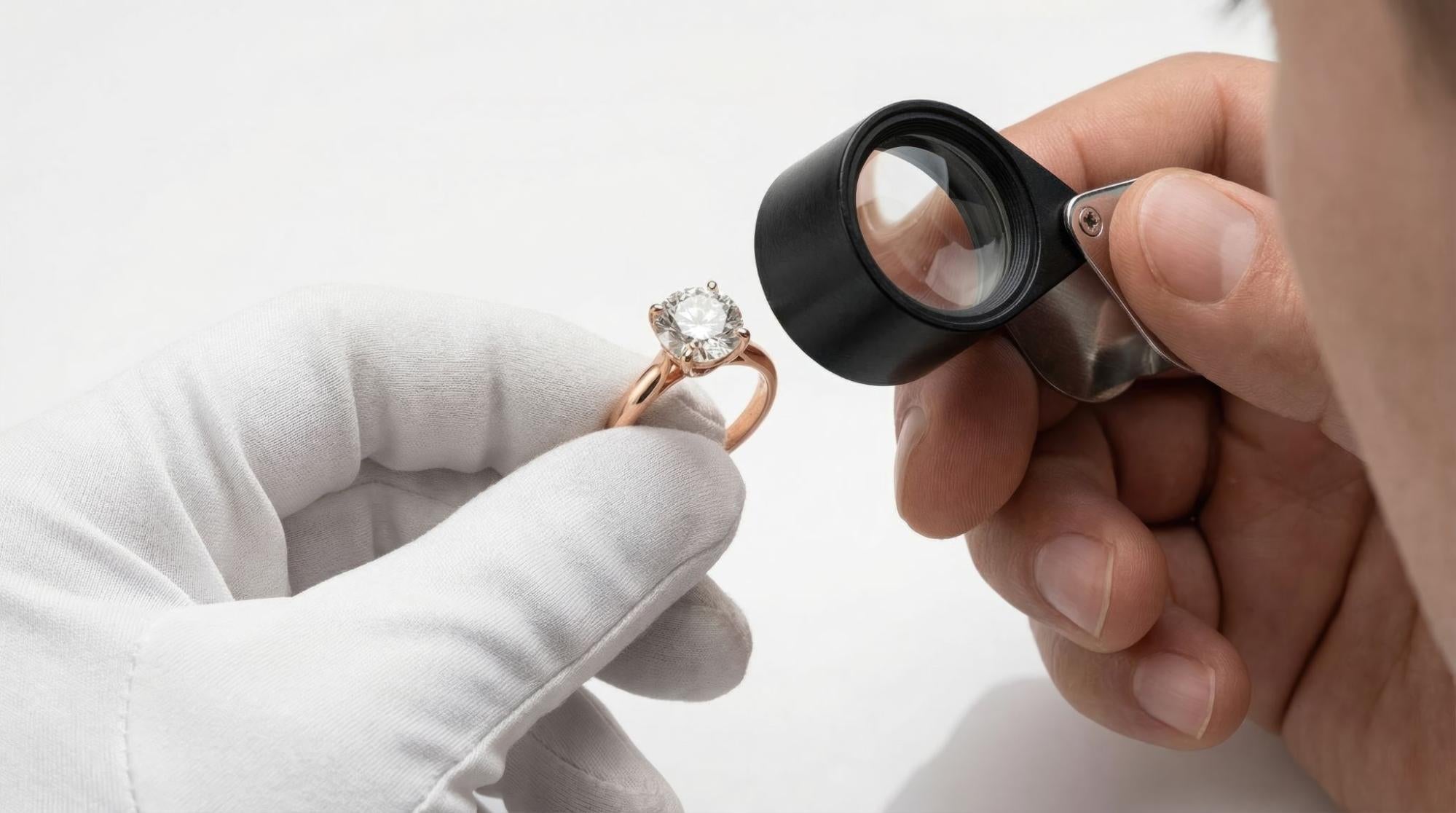
Clarity refers to the tiny natural "birthmarks" inside a diamond. While "Flawless" sounds amazing, most inclusions are so microscopic that you’d need a powerful loupe to see them.
-
The Yelton Way: We focus on finding "eye-clean" diamonds. This means the stone looks perfect to you and everyone admires it, even if it has tiny characteristics only a jeweler can see. This allows you to put more of your budget into a better Cut or a larger Carat.
4. Carat: It’s About Weight, Not Just Size
Carat is the measure of a diamond's weight. While everyone has a "target" weight in mind, remember that two diamonds of the same carat weight can look different in size depending on their cut.
-
The Yelton Way: We love finding "under-the-radar" weights. A .90-carat diamond often looks identical to a 1.00-carat stone but comes at a much friendlier price point. We’ll work with you to find that visual "sweet spot."
Natural vs. Lab-Grown: Which is Right for You?
At Yelton’s, we’re proud to offer both Natural Diamonds and Lab-Grown Diamonds.
-
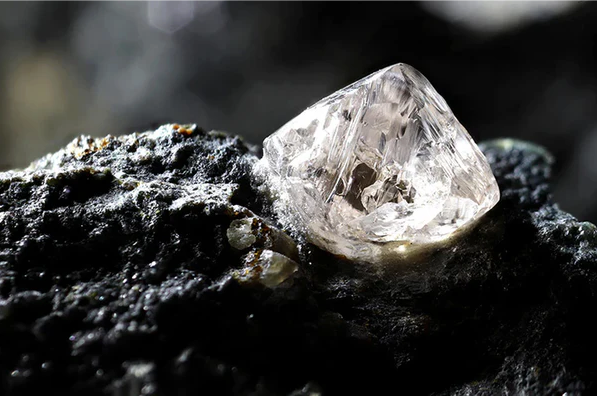
Natural Diamonds are miracles of nature, billions of years old, and hold a unique long-term significance and value.
-
Lab-Grown Diamonds are chemically and physically identical to natural diamonds but offer a larger look for a smaller investment.
There is no "wrong" choice—only the choice that feels right for your story and your budget.
Why the Yelton Experience is Different
A certificate (like those from the GIA) is an essential tool, but it doesn't tell the whole story. Some diamonds have "fluorescence" that makes them look hazy, while others have a personality that the report just can't capture.
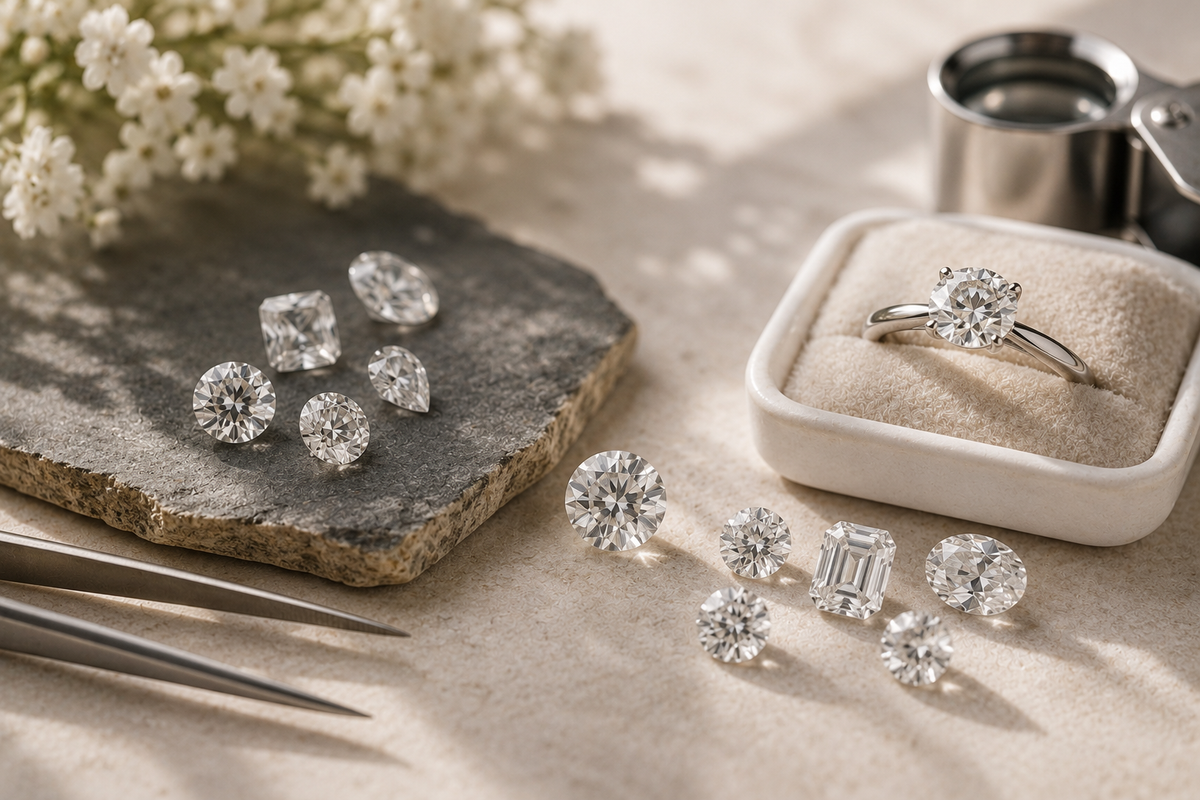
That’s why we invite you to come into our West Chester showroom. We’ll pull out the loose stones and let you see the difference for yourself. We aren't here to sell you a grading report; we’re here for you to find the diamond that will make your heart skip a beat every time it catches the light.
The 4 Cs of Diamonds: A Guide to Finding Your Perfect Sparkle at Yelton’s
When you walk into a jewelry store, it’s easy to get dazzled by the rows of sparkling cases—and then immediately overwhelmed by technical jargon. At Yelton Fine Jewelers, we believe choosing a diamond should be one of the most exciting moments of your life, not a pop quiz on gemology.
Our philosophy is simple: Don't buy a diamond just because it looks good on a piece of paper. Buy it because it looks breathtaking in real life. Here is our "straight-talk" guide to the 4 Cs and how to prioritize what really matters.
1. Cut: The Engine of the Sparkle
If you remember only one thing from this guide, let it be this: Cut is king. Cut doesn't refer to the shape (like Round or Pear), but rather how well the diamond’s facets interact with light. A diamond can have perfect color and clarity, but if the cut is too shallow or too deep, it will look dull.
-
The Yelton Way: we almost always steer our clients toward "Excellent" or "Ideal" cuts. A well-cut diamond reflects light so efficiently that it can actually look larger and brighter than a heavier diamond with a poor cut.
2. Color: Finding the "Sweet Spot"
Color measures how "white" or colorless a diamond is, graded from D (colorless) to Z (light yellow).
-
The Yelton Way: You don’t always need a "D" grade to have a stunning ring. Many diamonds in the G-J range (near-colorless) look identical to the naked eye once they are set in a ring, but they offer significantly better value.
-
Pro-Tip: If you’re choosing a yellow gold setting, you can often go a little lower on the color scale, as the gold's warmth makes the diamond look even whiter!
3. Clarity: Looking for "Eye-Clean"
Clarity refers to the tiny natural "birthmarks" inside a diamond. While "Flawless" sounds amazing, most inclusions are so microscopic that you’d need a powerful loupe to see them.
-
The Yelton Way: We focus on finding "eye-clean" diamonds. This means the stone looks perfect to you and everyone admires it, even if it has tiny characteristics only a jeweler can see. This allows you to put more of your budget into a better Cut or a larger Carat.
4. Carat: It’s About Weight, Not Just Size
Carat is the measure of a diamond's weight. While everyone has a "target" weight in mind, remember that two diamonds of the same carat weight can look different in size depending on their cut.
-
The Yelton Way: We love finding "under-the-radar" weights. A .90-carat diamond often looks identical to a 1.00-carat stone but comes at a much friendlier price point. We’ll work with you to find that visual "sweet spot."
Natural vs. Lab-Grown: Which is Right for You?
At Yelton’s, we’re proud to offer both Natural Diamonds and Lab-Grown Diamonds.
-
Natural Diamonds are miracles of nature, billions of years old, and hold a unique long-term significance and value.
-
Lab-Grown Diamonds are chemically and physically identical to natural diamonds but offer a larger look for a smaller investment.
There is no "wrong" choice—only the choice that feels right for your story and your budget.
Why the Yelton Experience is Different
A certificate (like those from the GIA) is an essential tool, but it doesn't tell the whole story. Some diamonds have "fluorescence" that makes them look hazy, while others have a personality that the report just can't capture.
That’s why we invite you to come into our West Chester showroom. We’ll pull out the loose stones and let you see the difference for yourself. We aren't here to sell you a grading report; we’re here for you to find the diamond that will make your heart skip a beat every time it catches the light.