Natural vs Lab Grown Diamonds: Which Diamond Offers the Best Value?
Choosing a diamond is personal. Whether you are selecting a center stone for an engagement ring, marking an anniversary, or adding a meaningful piece of diamond jewelry to your collection, there is more than one way to define value.
Natural and lab grown diamonds are both real diamonds, but they have very different origins. Those differences influence rarity, price, long term value, and the story behind the stone. At Yelton Fine Jewelers, we believe our clients deserve options as well as honest information about what they are buying.
Understanding how natural and lab grown diamonds compare can guide you to decide which choice makes the most sense for your priorities.
What Is the Difference Between Natural and Lab Grown Diamonds?
The primary difference between natural and lab grown diamonds is their origin.
Natural diamonds form deep within the Earth under extreme heat and pressure over billions of years. Volcanic forces eventually carry them toward the Earth's surface, where they can be recovered. Each natural diamond is a unique creation of nature, and the conditions required for its formation contribute to its rarity.
Lab grown diamonds are created in scientifically controlled environments. Advanced technology recreates the conditions associated with natural diamond growth, forming a diamond over a much shorter period of time.
Despite these very different origins, lab grown diamonds are not diamond simulants. They are chemically and structurally the same as natural diamonds and share the physical and optical properties associated with diamond.
For someone choosing between the two, the question is not whether one is a real diamond. Both are. The more important question is what you want your diamond to represent and which characteristics matter most to you.
Can You See a Difference Between Natural and Lab Grown Diamonds?
One of the most common questions we hear about lab grown diamonds is whether they look different from natural diamonds.
To the naked eye, they do not.
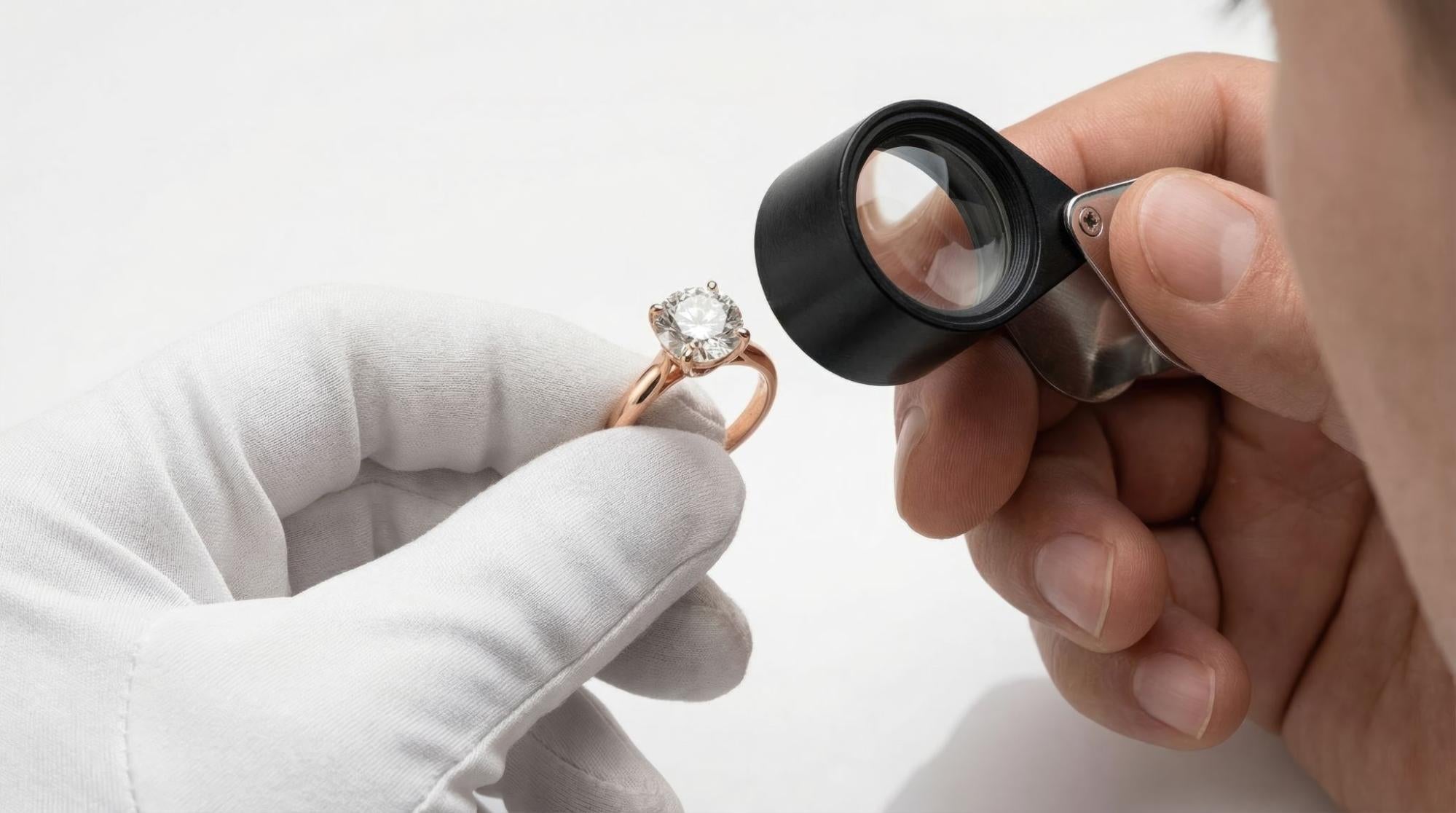
Natural and lab grown diamonds share the same sparkle, brilliance, and hardness. Even a trained jeweler cannot reliably determine a diamond's origin through visual inspection alone. Professional screening technology and trusted laboratory reports are used to properly identify whether a diamond is natural or lab grown.
However, that does not mean every diamond looks exactly the same.
Just like natural diamonds, the beauty of a lab grown diamond depends on factors such as cut, color, clarity, and carat weight. Cut quality is especially important because proportions and craftsmanship influence how effectively a diamond interacts with light.
The lab growing process can also produce variations. Some lab grown diamonds may display subtle gray, green, or yellow hues depending on the conditions in which they were created. Certification provides important information, but we believe it should be the beginning of the evaluation rather than the end.
That is why we carefully inspect every lab grown diamond we offer for color, brilliance, and overall beauty. A diamond should look exceptional in person, not simply meet specifications on a grading report.
Natural vs Lab Grown Diamond Rarity
Rarity is one of the clearest differences between these two diamond options.
Natural diamonds require very specific geological conditions and billions of years to form. They are a finite natural resource, and their rarity has played an important role in the way diamonds have been valued and treasured for generations.
Lab grown diamonds can be produced as technology and manufacturing capacity allow. As production increases, lab grown diamonds become less rare.
That distinction can matter if part of what attracts you to a diamond is its natural origin. A natural diamond represents something created by the Earth over an extraordinary period of time, and no additional supply can simply be manufactured.
For other buyers, rarity may be less important than size, quality, or budget. In that case, lab grown diamonds can provide another way to achieve the appearance and characteristics you want.
Neither preference is inherently right or wrong. It comes down to what gives the diamond meaning to you.
How Do Natural and Lab Grown Diamond Prices Compare?
Price is another significant difference between natural and lab grown diamonds.
Lab grown diamonds are generally less expensive than comparable natural diamonds. The price gap has continued to grow as lab growing technology has advanced and production has increased.
For buyers, that difference can create more flexibility within a jewelry budget. Choosing a lab grown diamond may allow you to prioritize a larger carat weight or different color and clarity characteristics while remaining within your desired price range.
Natural diamonds generally command higher prices because they cannot be produced on demand and remain rare.
This is why comparing diamonds based only on carat weight does not tell the entire story. The origin of the diamond, along with its cut, color, clarity, and carat weight, should all be considered when evaluating what you are getting for your budget.
Our Diamond Guide provides additional information about the characteristics that influence diamond quality and beauty, including the 4Cs and the importance of viewing diamonds in person.
Which Diamond Offers Better Long Term Value?
Upfront affordability and long term value are two different considerations.
Lab grown diamonds can provide considerable value at the time of purchase because their lower prices can make certain sizes and quality characteristics more accessible. At the same time, continued advances in technology and increased production have contributed to declining lab grown diamond prices.
Natural diamonds have a different relationship with value because their supply is limited by nature. Their rarity cannot be replicated through increased production.
At Yelton Fine Jewelers, we believe documentation and proper grading are particularly important when considering long term value. Natural diamonds should be properly graded, inscribed, and documented so you know exactly what you own.
A diamond should not necessarily be viewed only as a financial investment. It is often purchased to represent a relationship, milestone, or memory. Still, understanding how rarity and changing market conditions can affect value allows you to make a more informed decision before purchasing.
If your priority is maximizing what you can purchase today for your budget, lab grown diamonds may be appealing. If natural rarity and potential long term value are more important to you, a natural diamond may better reflect those priorities.
Are Lab Grown Diamonds More Environmentally Friendly?
The environmental comparison between natural and lab grown diamonds is more complicated than it may initially appear.
Because lab grown diamonds do not require traditional diamond mining, it can be easy to assume they are automatically the more environmentally friendly choice. However, producing a lab grown diamond requires significant energy to create and maintain the conditions necessary for diamond crystal growth.
Natural diamonds involve mining, but responsible sourcing and modern mining practices are also important parts of the conversation. Natural diamond production can provide economic benefits to mining communities, while responsible suppliers can support fair labor practices, community development, environmental standards, and greater transparency throughout the supply chain.
At Yelton Fine Jewelers, responsible sourcing is a priority. As we explain in our Diamond Guide, we work with diamond suppliers chosen for their commitment to integrity, transparency, sustainability, and positive impact in the communities where they operate. Our standards go beyond the minimum requirements of the Kimberley Process, with an emphasis on traceability and accountability.
For that reason, we do not believe the environmental question should be reduced to the assumption that one diamond origin is automatically better than the other. Both natural and lab grown diamonds have environmental considerations, and understanding how a particular diamond was sourced or produced provides a more complete picture.
What About Ethical Diamond Sourcing?
Ethical sourcing is equally important when evaluating natural diamonds.
We believe the people and communities connected to a diamond's journey matter. The suppliers we work with are carefully selected based on standards that include fair labor practices, community development, sustainability, transparency, and accountability.
Responsible natural diamond sourcing can support communities and local economies in diamond producing regions. Choosing suppliers that prioritize traceability allows us to provide greater confidence in the diamonds we offer.
Lab grown diamonds provide a different origin story because they are produced in controlled environments rather than mined from the Earth. Buyers who prefer that origin may find it aligns more closely with their personal priorities.
Regardless of which type you choose, knowing where your diamond comes from and working with a jeweler who is transparent about its origin should be part of the buying process.
How Do the 4Cs Apply to Natural and Lab Grown Diamonds?
Whether you choose natural or lab grown, the traditional 4Cs remain important: cut, color, clarity, and carat weight.
Cut influences how effectively the diamond reflects light and can have a major effect on its brilliance. Color evaluates the natural body color visible in a diamond, while clarity considers internal characteristics and inclusions. Carat refers to the diamond's weight.
These factors work together rather than independently. A larger diamond is not necessarily a more beautiful diamond if its cut or other characteristics compromise its appearance.
This is also why we encourage clients to compare diamonds in person whenever possible. A grading report provides valuable information, but it cannot fully communicate how a diamond handles light or how it looks when you see it with your own eyes.
Our approach to diamond quality and the 4Cs goes beyond the information printed on a grading report. We carefully examine factors such as polish, proportions, symmetry, transparency, and overall visual beauty when selecting diamonds.
The same principle applies to lab grown diamonds. Two certified stones with similar specifications can still look different in person, which is why our visual inspection process remains an important part of selecting the diamonds we offer.
Natural or Lab Grown: Which Diamond Is Right for You?
The best value ultimately depends on how you define it.
A natural diamond may be the right choice if you are drawn to rarity, geological history, responsible natural sourcing, and the enduring appeal of something that cannot be reproduced on demand.
A lab grown diamond may make more sense if your priorities include a lower initial price, greater flexibility within your budget, or the ability to choose a larger diamond or different quality characteristics at a particular price point.
From a visual standpoint, both can be beautiful. From a physical standpoint, both are diamonds. The meaningful differences lie in where they come from, how rare they are, how they are priced, and what those distinctions mean to you.
At Yelton Fine Jewelers, we offer both natural and lab grown diamonds because we believe choosing a diamond should begin with education rather than pressure. Learn more about lab grown diamonds, review our Diamond Guide, or visit us in West Chester to compare your options in person and let our team work with you to choose the diamond that offers the right value for your story.